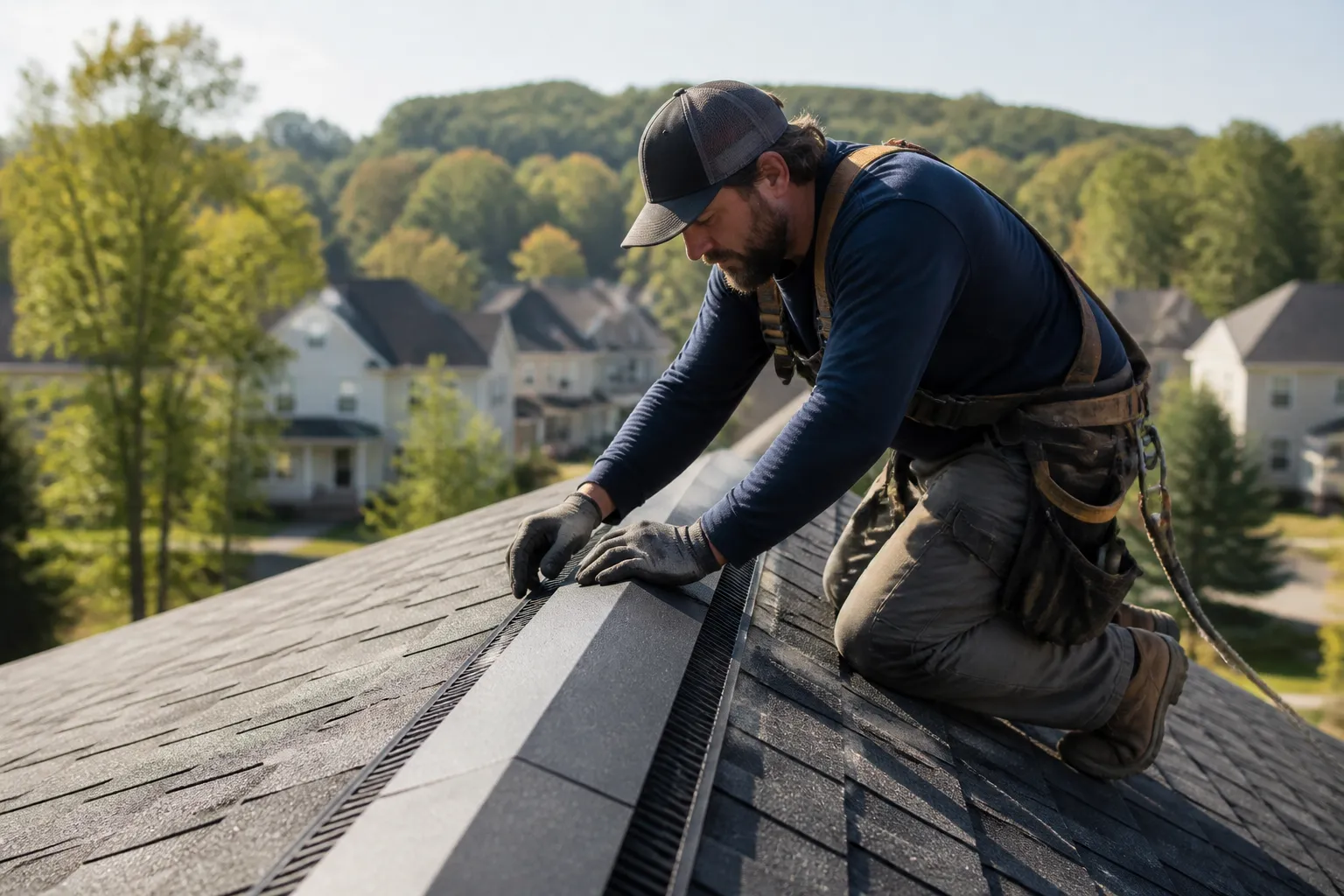
A hot upstairs room, damp attic insulation, peeling paint near the eaves, or unusually warm attic air can point to a ventilation problem. Because Cumming homes face long humid summers and changing weather, the space beneath your roof needs a dependable path for heat and moisture to move out.
Cumming Elite Roofing evaluates the whole attic and roof system, not just one vent. We can identify blocked intake, insufficient exhaust, damaged ridge vents, and other conditions that may be affecting comfort and roof performance.
Good ventilation works as a system. Cooler outside air enters through intake vents near the soffits, while warmer air exits through exhaust vents near the ridge or roof peak. The right balance depends on the roof design, attic layout, insulation, and existing openings.
We look at roof shape, soffit areas, ridge lines, insulation levels, and the locations of existing vents.
We identify whether air can enter low and exit high without blocked pathways or competing vent types.
Condensation, staining, rusted fasteners, and damp sheathing can reveal a ventilation concern.
We explain what is present, what is missing, and how the recommended work fits your roof.
Soffit intake is often essential because exhaust vents cannot pull fresh air through an attic if the lower intake path is blocked by insulation or missing altogether.
Ridge vents, box vents, and other exhaust methods must be selected and placed carefully. Mixing incompatible exhaust types can reduce the effectiveness of the system.
Ventilation improvements are commonly considered during roof replacement, after a moisture concern is discovered, or when attic conditions suggest the existing system is not balanced. Addressing those details while roofing work is underway can help avoid reopening finished areas later.
We will discuss the symptoms you have noticed, inspect accessible areas, and review the options in straightforward terms. If changes are appropriate, you will understand the scope before work begins.
It can help reduce heat buildup in the attic when the rest of the home is properly insulated and conditioned. We look at ventilation and insulation together so the recommendation addresses the likely source of the problem.
No. Ridge vents work well on many roof designs, but they are not the only option. The roof shape, ridge length, intake capacity, and existing ventilation all affect what makes sense.
Yes. Insulation installed over soffit openings can limit the fresh-air path into the attic. Baffles and clear channels are often used to keep insulation in place while preserving airflow.
It may appear as damp sheathing, dark staining, condensation on nails, or musty odors. Those clues can have more than one cause, so a complete inspection is important before choosing a fix.
Yes. Roof replacement is a practical time to review ridge, soffit, and other vent locations. It allows the roof system to be considered as a whole rather than as separate pieces.
No. Bathroom exhaust should be routed to the exterior rather than released into attic space. Moist indoor air in an attic can contribute to condensation and material deterioration over time.

Get Started
Share what is happening with your roof, gutters, or storm damage concerns, and we will help you understand the best next step for your property in Cumming or the surrounding area.