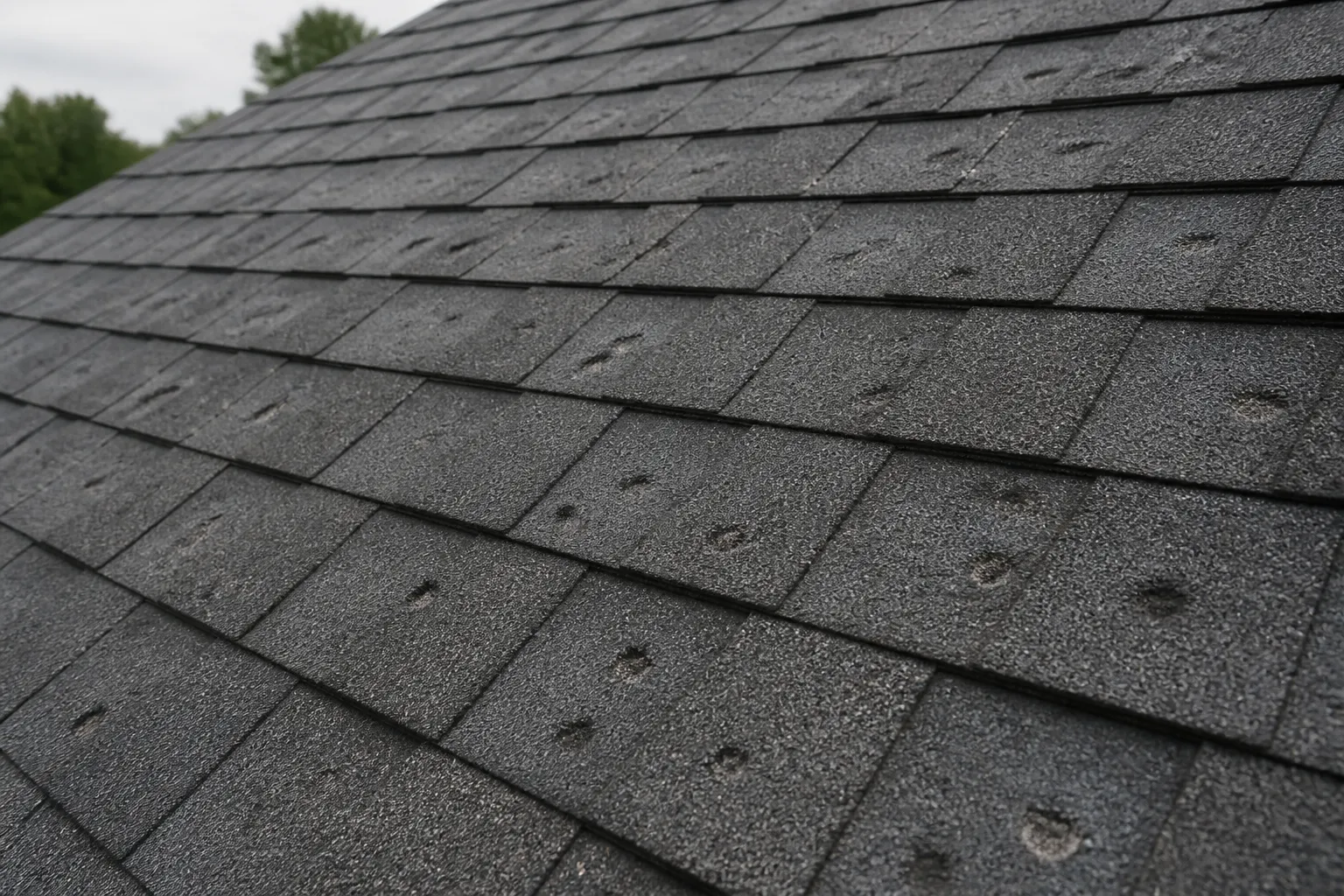
Hail can leave more than a few marks on a roof. You may notice missing granules, dented shingles, loose flashing, or a small leak that shows up after the next rain. Even when the damage looks minor from the ground, it can weaken your roof and leave your home exposed to more costly trouble later.
Cumming Elite Roofing helps property owners across Cumming, Georgia address hail damage with clear inspections and focused repair work. If your roof was hit by hail and you are not sure what needs attention, we can look it over, explain what we find, and recommend the next step based on the condition of the roof, not guesswork.
Hail damage is not always obvious right away. Some roofs show clear bruising, while others hide the problem until shingles loosen or water starts to work its way through the roof system. Knowing what to look for can help you act before a small issue turns into wider damage.
If you notice one or more of these signs after a storm, it is a good time to schedule a roof inspection. Catching hail damage early can limit the amount of repair work needed.
Hail affects roofing materials differently depending on the size of the hailstones, the wind during the storm, and the age of the roof. Some damage is cosmetic, but other impacts can weaken the protective layers that help a roof shed water. Once that protection is compromised, a roof becomes more vulnerable to leaks and faster wear.
Asphalt shingles can lose protective granules when struck by hail. That protective coating helps shield the material from sun and weather. When it is reduced, the roof can age faster and become more likely to fail at stress points.
Metal roofing and flashing can dent, bend, or pull away at seams after hail. Even small shifts can leave openings where water can enter. A careful inspection helps determine whether the issue is surface damage or a repair that needs attention right away.
Some hail damage does not show until later. A roof may look acceptable from the yard, but impact points may have weakened the surface underneath. That is why a close check of the entire roof matters after a storm, especially if you see changes inside the home or around the gutters.
Hail damage repair should be straightforward. Homeowners want clear answers, a practical plan, and work that matches the condition of the roof. Our process is built to give you that without confusion.
This approach helps keep the process focused on what your roof actually needs. For many homeowners, that means less uncertainty and a clearer path forward after a storm.
Not every hail strike calls for the same fix. The right solution depends on the material, the extent of the damage, and whether the problem is limited to one area or spread across multiple sections. At Cumming Elite Roofing, we look at the roof as a whole so the repair matches the damage pattern.
Some roofs only need a small repair. Others need several coordinated fixes to restore dependable protection. We talk through those options so you can make a practical decision for your property.
Sometimes hail damage is widespread enough that repair work alone is not the right answer. If the roof has repeated impact damage, significant aging, or multiple weak areas, a roof replacement may be more practical than chasing one repair after another. We can assess whether the roof still has enough life left for a focused repair or whether replacement would serve you better over time.
That conversation is based on what we see on the roof, not on a one-size-fits-all recommendation. If repair will solve the problem, we will point you there. If the roof has reached the point where replacement makes more sense, we will explain why.
Hail damage often gets overlooked because the roof may still look mostly intact from the street. The trouble is that small impact points can allow water intrusion, loosen materials, and create added wear with each storm that follows. Addressing the damage sooner helps reduce the chance of more extensive roof repair work later.
Quick attention can also make the roof easier to evaluate. Fresh hail damage is often easier to identify than old storm wear that has been mixed with years of weather exposure. If you are unsure about the age or extent of the damage, getting the roof checked sooner gives you a clearer picture.
Hail damage affects different roofing systems in different ways. Our work covers the roofing materials and related exterior components commonly affected by storm impact.
We repair hail-affected asphalt shingle roofs that show bruising, cracking, loose tabs, or missing material.
We address dents, seam concerns, and related storm damage that may affect the roof’s ability to shed water as intended.
Hail can also damage gutters and downspouts, leading to drainage problems along the roof edge. We handle gutter installation, gutter replacement, and gutter repair when storm damage calls for it.
Hail repair needs can come up for homes across Cumming, Georgia and nearby communities. Whether your roof serves a single-family home, rental property, or other residential structure, the goal stays the same: restore solid protection and stop minor impact damage from becoming a bigger issue.
We also work with property owners throughout Alpharetta, Johns Creek, Suwanee, Gainesville, Milton, Buford, Sugarhill, Flowery Branch, Dawsonville, Dacula, Braselton, and Ball Ground. If your roof has been through a storm and you want a clear look at the damage, we are ready to help.
Look for dents, missing granules, cracked shingles, or dark bruised spots on the roof surface. Inside the home, ceiling stains or attic dampness can also point to hail damage that needs attention.
No. Some storms leave little to no visible harm, while others cause enough impact to weaken shingles, flashing, or gutters. A roof inspection is the best way to tell the difference.
Yes. Some signs are visible from the ground, but many impact points are subtle and easier to spot during a closer inspection of the roof surface and edges.
That can still matter. Even a smaller damaged area may let water enter or create a weak point that needs repair before it spreads.
Yes. Dented or loose gutters can affect how water moves away from the roof and the home, so they should be checked after a hailstorm.
As soon as you can after the storm passes and it is safe to check the property. Early inspection helps identify fresh damage before it blends into older wear.
If your roof has taken hail damage, do not wait for a leak to tell you the problem is serious. Cumming Elite Roofing provides hail damage roof repair for homeowners and property owners who want clear answers and solid work from a local roofing company serving Cumming, Georgia. Call +17707585475 to schedule a roof inspection and get the next step for your property.
Get Started
Share what is happening with your roof, gutters, or storm damage concerns, and we will help you understand the best next step for your property in Cumming or the surrounding area.