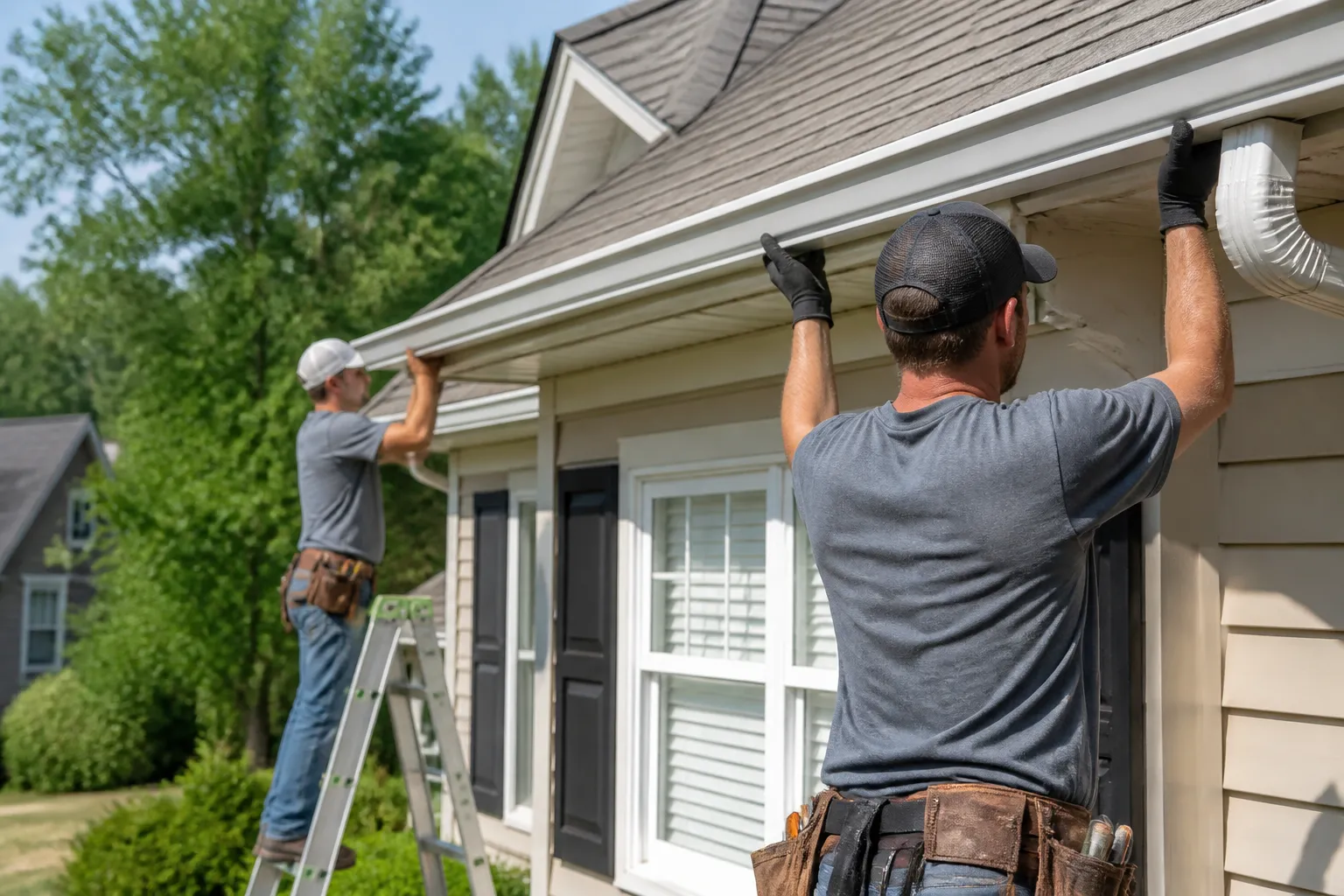
If rainwater is spilling over the edge of your roof, pooling near the house, or staining the fascia, your gutters may no longer be doing their job. Missing sections, sagging runs, and joints that separate during storms can leave your property exposed to runoff that should have been directed away from the structure.
Cumming Elite Roofing helps homeowners and businesses with gutter installation across Cumming, Georgia. We look at how water moves off the roof, where it collects, and what kind of gutter setup fits the building so the next rainfall does not create a new problem.
Gutters often give clear warning signs before they fail completely. If you notice water spilling over the sides, dark streaks on the exterior, or damp spots near the base of the building, it is worth taking a closer look. A gutter system that is too small, damaged, or poorly pitched can let runoff land where it should not.
Some properties need new gutter installation because the old system has been patched too many times. Others need a full replacement after roof work, storm damage, or years of wear. When the gutter line can no longer handle the roof’s runoff, replacing it can protect the roof edge, siding, soffits, and landscape below.
Every gutter installation starts with a close look at the roof edge and the path water takes once it leaves the shingles. We check the pitch, roof length, drainage points, and the condition of surrounding trim so the new system supports the structure rather than fighting against it.
Cumming Elite Roofing also looks at how the gutters tie into other parts of the exterior. If the fascia is weakened or the roof edge has been damaged, installing new gutters without addressing those areas can leave you with the same trouble later. A careful assessment helps us recommend a setup that makes sense for the property and the runoff it handles.
Different buildings need different gutter setups. The right choice depends on roof shape, water volume, and how the property is used. We help homeowners and businesses choose a system that matches the structure instead of forcing a one-size-fits-all approach.
Gutter installation can also be part of a larger exterior project. If you are replacing a roof, correcting storm damage, or updating older gutters that no longer hold up, it is often easier to handle the drainage work as part of the same plan. That can help the final result look cleaner and perform better over time.
Good gutter installation is more than attaching a line of metal along the roof edge. It should create a clear path for runoff from the roof to the ground and away from the structure. That means careful placement, solid fastening, and a layout that avoids standing water inside the system.
When we install gutters, we focus on details that affect how they hold up day after day. That includes secure mounting, sensible slope, and placement that supports drainage without putting extra stress on the roof edge. The goal is a system that matches the structure and helps reduce water-related wear.
The gutter system should match the building, the roofline, and the amount of runoff the roof produces. Some properties need a simpler layout, while others need a more considered design to manage long roof sections or multiple drainage points. We talk through those details so the finished setup fits the property rather than just filling space.
For many customers, appearance matters too. Gutters are visible from the street, so the system should look clean and intentional. We aim for an installation that supports the property’s exterior without drawing attention for the wrong reasons.
If gutters are installed at the wrong slope, with too few downspouts, or with weak attachment points, water can linger where it should not. Over time, that can leave stains, wear down exterior surfaces, and create repeated cleanup after every rain. A well-planned gutter installation helps reduce those headaches.
Homeowners sometimes notice the problem first on the ground. If soil is washing away, mulch keeps moving, or water collects near walkways and foundations, the gutter layout may need to be revised. It is easier to correct those drainage concerns with a thoughtful installation than to keep patching the effects later.
When you contact Cumming Elite Roofing for gutter installation in Cumming, Georgia, we start by learning what you have noticed and what the property needs. From there, we review the roofline, talk through the best approach, and move forward with a plan that keeps the process clear and manageable.
We keep communication straightforward so you know what is being installed and why. If your gutters are tied to other roof concerns, such as leak repair, missing shingles, or storm damage restoration, we can factor that into the work so the drainage system supports the rest of the exterior.
We serve Cumming, Georgia, along with nearby communities including Alpharetta, Roswell, Johns Creek, Milton, Suwanee, Gainesville, Buford, Sugarhill, Flowery Branch, Dawsonville, Dacula, Braselton, and Ball Ground. If your property is outside Cumming but still nearby, ask whether your location is part of our current service area.
Whether the property is a home or a business, the goal is the same: move roof runoff away from the structure with a gutter system that fits the building and the way water moves around it.
Look for repeated overflow, sagging sections, visible cracks, rust, separated joints, or water collecting near the building after rain. If patches keep failing, replacement may be the more practical option.
Yes. Many property owners choose gutter installation after roof repair or roof replacement so the drainage system matches the updated roof edge and trim.
They do. Gutters move runoff away from the roofline, which helps reduce staining, splashback, and water exposure on siding, fascia, and nearby surfaces.
That often points to runoff landing too close to the structure or downspouts that do not carry water far enough away. A new gutter layout can help redirect that flow.
Yes. It is often helpful to coordinate gutter work with roof repairs, roof replacement, or storm damage restoration so the exterior system works together.
Yes. We review the roofline, fascia, and drainage path first so the new system is planned around the actual condition of the property.
If your gutters are failing, missing, or no longer matching the needs of the property, now is the time to address them. Cumming Elite Roofing installs gutter systems for properties across Cumming, Georgia, with attention to the details that affect drainage, appearance, and long-term performance.
Call +17707585475 to talk through your gutter installation needs and schedule a visit that fits your property.

Get Started
Share what is happening with your roof, gutters, or storm damage concerns, and we will help you understand the best next step for your property in Cumming or the surrounding area.