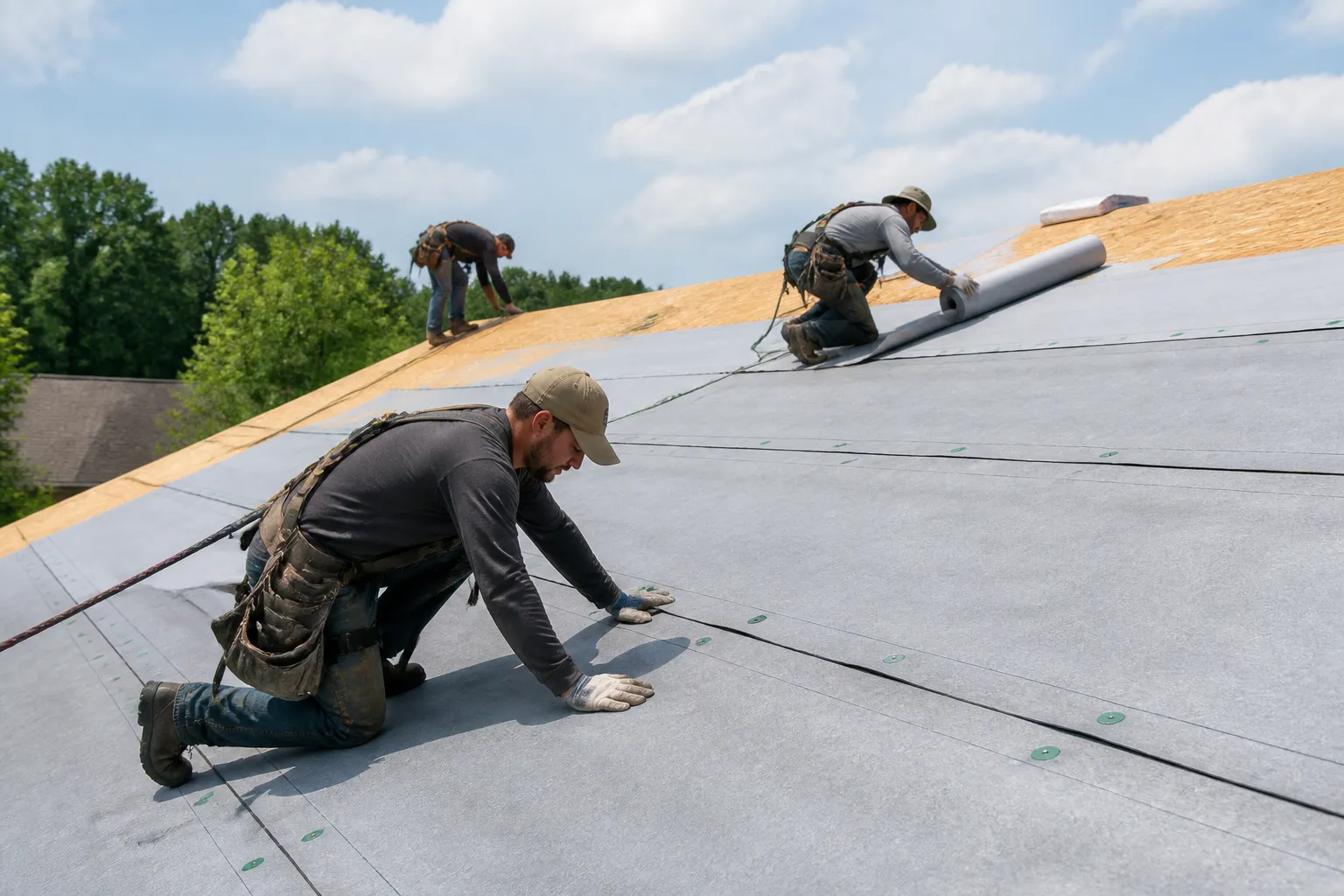
Shingles are the visible part of many roofs, but they are not the only layer that protects your home. Roof underlayment sits beneath the outer covering and provides an added water-shedding layer around the roof deck, valleys, edges, and other vulnerable details.
Cumming Elite Roofing addresses underlayment as part of a complete roofing system. Whether it is discovered during repair work or included in a replacement project, we explain how the material and installation details relate to your roof's condition.
Underlayment is installed over the roof deck before shingles or other final roofing materials are applied. It helps manage moisture that gets past the outer layer and supports the way the roof components work together.
We review the condition of the visible roofing materials and determine whether underlayment is accessible within the scope of work.
A sound, dry deck is important before new layers are installed, so we identify any conditions that need to be addressed.
We use an underlayment approach that fits the roof covering, slope, and detail areas involved.
Edges, valleys, penetrations, and flashing are layered to direct water outward over the roof surface.
Valleys collect water from multiple roof planes, while edges are exposed to runoff and wind. These areas deserve careful layering and secure integration with the surrounding materials.
Underlayment supports the flashing system around pipes, walls, chimneys, and other roof changes. Proper overlap helps direct water away from the roof deck.
A roof replacement offers the clearest opportunity to inspect and renew the underlayment across the full roof. Once new shingles are installed, the layer is no longer visible, which is why installation quality is important at that stage.
We explain what can be seen, what needs to be opened to confirm a condition, and how the recommended scope protects the roof system. You will not be asked to make decisions without understanding the purpose of the work.
It provides a secondary protective layer between the roof deck and the outer roofing material. It helps manage moisture and supports the water-shedding details at vulnerable parts of the roof.
Sometimes a localized repair allows access to a limited area of underlayment. Replacing it across an entire roof generally requires removing the outer roofing materials first.
No. Both can be part of a roofing system, but they serve different roles and may be used in different locations. The appropriate layers depend on the roof design and the details being addressed.
Damaged material can reduce the added protection beneath the shingles, especially where water reaches a vulnerable transition. The surrounding roofing layers need inspection to determine the appropriate repair.
A complete roof replacement commonly includes renewal of the underlayment because the roof deck is exposed during the work. The written scope should identify the materials and areas included.
Yes. Water can enter at a flashing detail, penetration, or transition and move beneath the outer surface. That is why a leak assessment looks beyond the shingles directly above an interior stain.

Get Started
Share what is happening with your roof, gutters, or storm damage concerns, and we will help you understand the best next step for your property in Cumming or the surrounding area.