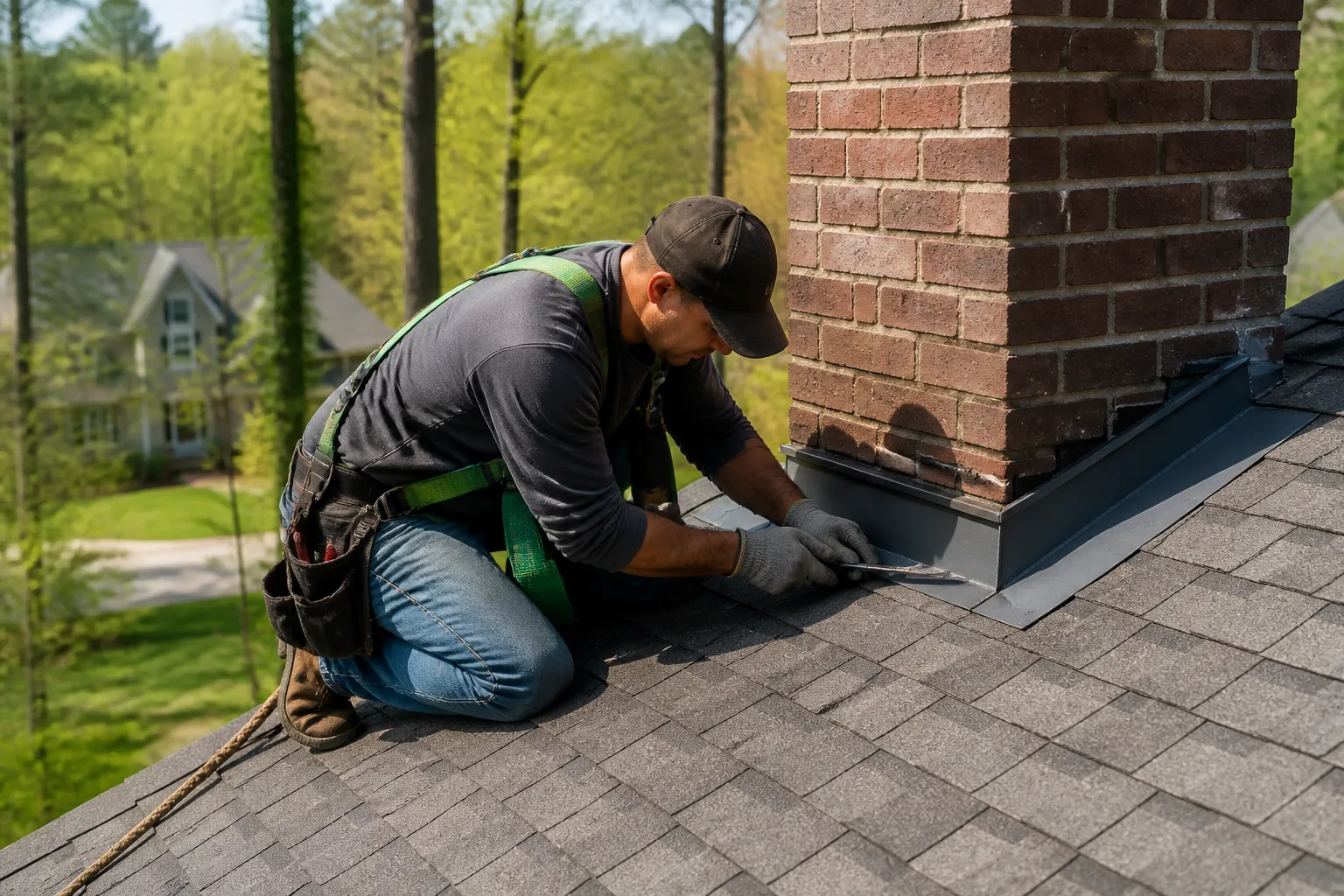
Roof leaks often begin at a transition, not in the middle of a shingle field. Flashing directs water away from chimneys, skylights, pipe penetrations, sidewalls, and roof valleys, so a loose, rusted, or poorly sealed section can let water reach the structure below.
Cumming Elite Roofing provides careful roof flashing repair for homeowners in Cumming, GA. We trace the source of the concern, assess the surrounding roofing materials, and recommend a repair that addresses the water path rather than simply covering it with sealant.
Flashing is a system of shaped metal and compatible roofing materials. It needs correct overlap, secure attachment, and a clear route for water to shed. Small details matter because wind-driven rain can reach places ordinary rainfall does not.
We inspect the feature above the leak and the surrounding roof area to understand how water is moving.
Flashing repair often involves nearby shingles, underlayment, siding, or counterflashing, so we check the full transition.
We replace or reset compromised flashing and integrate it correctly with compatible roofing materials.
We explain the repair and point out any nearby conditions that deserve future attention.
Chimneys need coordinated base flashing and counterflashing to manage water where masonry meets the roof. Cracked mortar or loose metal can create a route for water behind the visible surface.
Plumbing vents and other penetrations rely on flexible boots and properly layered flashing. Sun exposure and age can cause those materials to crack or separate.
Sealant can be useful as part of a properly detailed repair, but it is not a substitute for correct flashing overlap. When the metal, shingles, or underlayment are compromised, the lasting solution usually involves restoring the layers that shed water.
We will explain the visible condition, the likely water path, and the scope of repair in plain language. You can ask questions before any work is scheduled, especially if the leak has affected an interior ceiling or wall.
Yes. Water that enters around a chimney, wall, or penetration can travel along framing before it becomes visible indoors. The stain location is useful information, but it may not sit directly beneath the source.
That depends on the condition and location. Secure, sound flashing may be reset and integrated with new materials, while rusted, bent, or improperly installed pieces are usually better replaced.
Wind can push water sideways into weak transitions that may not leak during a light, vertical rain. Chimney flashing and adjacent roofing layers need to be checked together in that situation.
Often, yes. A localized flashing problem can frequently be repaired when nearby roofing materials are still serviceable. The inspection helps determine whether the concern is isolated or part of broader wear.
Counterflashing is the upper flashing detail that covers and protects the base flashing, commonly at a chimney or masonry wall. Together, the pieces direct water back onto the roof surface.
It is worth checking if you notice loose materials, new interior staining, or damage near a roof transition. Storm wind and debris can disturb details that were previously secure.

Get Started
Share what is happening with your roof, gutters, or storm damage concerns, and we will help you understand the best next step for your property in Cumming or the surrounding area.